Drywall Disposal in Raleigh, NC: What Fall Renovation Homeowners Need to Know Before the Debris Sits Too Long
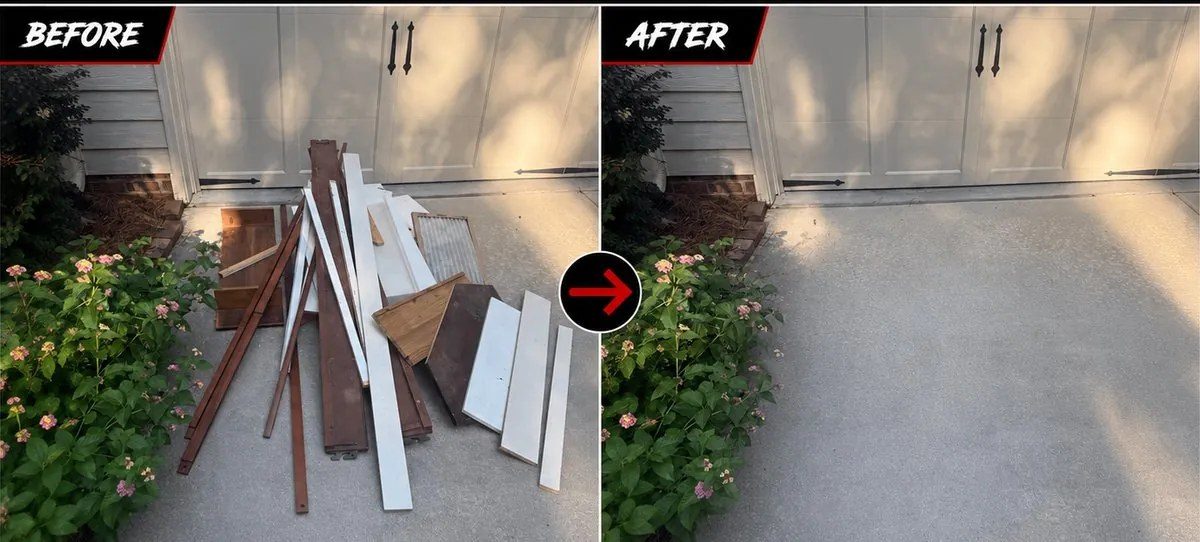
Drywall disposal after a Raleigh, NC fall renovation is more complicated than most homeowners expect, and the pile sitting in your driveway cannot simply go to the curb. The walls are fresh. The new insulation is in. The crew has packed up and left. And sitting in your driveway or garage is a stack of old drywall sheets, crumbled joint compound, and wads of old insulation batting that nobody told you how to get rid of. You figured you could haul it to the curb or toss it in a rented dumpster with everything else. Then you started reading the small print.
Here is the short version: most of it cannot go in your curbside bin, and some of it requires specific handling before it can go anywhere. If you are dealing with leftover construction debris from a fall renovation in Raleigh, NC, this post covers what you actually need to know and why insulation adds its own layer of complication.
#Can You Put Old Drywall in Your Regular Trash or Curbside Bin?
In most Raleigh, NC jurisdictions, the answer is no. Drywall is classified as construction and demolition (C&D) debris, which is a separate waste stream from household trash. The City of Raleigh and Wake County both distinguish between residential solid waste and C&D material, and your curbside hauler is not equipped or contracted to handle bulk construction debris. If you set drywall at the curb, there is a good chance it simply will not get picked up, or it will get picked up and then rejected at the transfer station, which creates a billing and compliance problem you do not want.
According to the U.S. Environmental Protection Agency, construction and demolition debris, including drywall, insulation, roofing, wood, and concrete, is managed separately from municipal solid waste in most states. That separation is not just a technicality. It matters because the volume and composition of C&D debris makes it incompatible with the equipment and facilities designed for household waste.
Even if your curbside hauler accepts some construction debris as a one-time courtesy, drywall is dense and heavy and is almost always excluded by weight limits. A few full sheets of half-inch drywall can weigh several hundred pounds. That is not a curbside pickup situation.
#What Makes Old Drywall and Insulation From Older Raleigh Homes Different?
Newer drywall is largely inert. But if your home was built before the 1980s, or if you are renovating a commercial property or older rental stock in Raleigh, the drywall coming out of your walls may not be straightforward material. Older joint compound, texture coatings, and adhesives sometimes contain asbestos, which is regulated under both federal and state law. The EPA's National Emission Standards for Hazardous Air Pollutants (NESHAP) require that renovation work involving regulated asbestos-containing materials be handled and disposed of in a specific way, with material kept wet during removal and transported in sealed containers to approved facilities.
You do not need to assume the worst about every old wall, but if your renovation exposed drywall or ceiling texture from before roughly 1980 and you did not have it tested before demo, that is worth a conversation with a professional before you load anything into a truck.
Insulation brings its own set of variables. Fiberglass batt insulation, the pink or yellow fluffy material most people recognize, is generally not hazardous but is still classified as C&D debris and requires proper disposal. Older blown-in insulation, particularly vermiculite, can contain asbestos contamination. Spray foam insulation requires specific handling once cured. And cellulose insulation, while made from recycled paper, is not accepted in household waste streams in most jurisdictions.
#What Does the Separation and Transport Process Actually Look Like?
Getting rid of drywall and insulation the right way involves more steps than loading a truck. Here is what the process looks like in practice.
- Drywall must be kept separate from insulation. Many disposal facilities will not accept mixed loads because they process each material differently.
- Drywall should be kept as dry as possible. Wet drywall becomes a different disposal problem and loses any recyclability it might have had.
- Insulation should be bagged or contained to prevent fiber release during transport. Fiberglass fibers are a respiratory irritant and you do not want them loose in a truck bed or blowing through a neighborhood.
- Joint compound, tape, screws, and metal corner beads mixed into the drywall pile need to be sorted out where possible.
- You need to identify which facility in the Raleigh area accepts C&D debris and confirm they take both drywall and insulation, because not every facility handles both.
That is a full afternoon of work before you have moved a single piece off your property. And if you have a large renovation, you may be looking at multiple truckloads. For larger projects, especially those involving full room gutting or property transitions, a property cleanout service handles the full scope in a single scheduled visit rather than piecemeal trips.
| Option | What It Covers | Practical Limitations |
|---|---|---|
| Curbside trash bin | Household solid waste only | C&D debris including drywall is almost always excluded; loads may be rejected |
| DIY haul to C&D facility | Works if material is properly sorted and you have the right vehicle | Requires sorting, containment, knowing facility hours and accepted materials, and multiple trips for large jobs |
| Rented dumpster | Can work for drywall-only loads if facility accepts it | Insulation and drywall often cannot be mixed; weight limits apply; hazardous material concerns still fall on you |
| Construction debris removal service | Full removal of drywall, insulation, and mixed C&D debris | Costs more upfront than DIY; requires scheduling |
#Why Is Fall the Wrong Time to Procrastinate on Debris Removal in Raleigh?
Fall renovation season in Raleigh runs hard from September through November. Homeowners are finishing projects before the holidays, contractors are closing out jobs, and C&D disposal facilities deal with a surge in volume. That matters to you for one practical reason: if you leave your debris sitting while you figure out a plan, you are competing with a lot of other people for the same disposal capacity and truck availability.
Old drywall that sits outside through fall rain also becomes a much heavier, messier problem. Drywall is gypsum sandwiched between paper. Once it gets wet repeatedly, it starts to deteriorate and can develop mold on the paper facing. What was a manageable disposal job in October can turn into a soggy, crumbling hazard by December.
If you finished your renovation and the debris is already sitting, act on it now rather than letting the weather decide for you. Raleigh falls are mild enough that materials hold up reasonably well through October, but wet November weather changes that equation fast.
#Why Construction Debris Removal Services Exist for This Exact Problem
This is not a market that developed because people are lazy. It exists because the logistics of proper C&D disposal are genuinely complicated for someone doing it once or twice, and because the physical labor of loading heavy drywall and managing loose insulation is work that most people are not set up to handle safely on their own.
A construction debris removal service like Capital Cleanout Co., which is veteran-owned and locally owned out of Raleigh, NC, handles the sorting, loading, and transport. Our junk removal in Raleigh, NC service covers the lifting and hauling so you can actually use your driveway again, without spending your Saturday calling around to find out which Wake County facility is open and what they will and will not accept. You can contact us for free estimates so you know what you are working with before committing to anything.
The goal is simple: you renovated the space to reclaim the space, and a pile of old drywall in the garage defeats that entirely. Getting the debris gone is the last step in finishing the job.
#Common Questions
Can I put drywall in a regular dumpster I rent for a renovation?
It depends on what the rental company and the receiving facility accept. Some dumpster providers allow clean drywall-only loads if they go to a C&D facility that handles gypsum. Many will not accept drywall mixed with other debris, and almost none will accept insulation in the same load as drywall. Read the terms before you load anything, and ask specifically about both materials before you rent.
Is old insulation from a Raleigh home considered hazardous waste?
Most modern fiberglass and cellulose insulation is not classified as hazardous, but certain older insulation types carry risk. Vermiculite insulation, common in homes from the mid-20th century, has a documented association with asbestos contamination, and the EPA recommends treating it as if it contains asbestos until tested. If you are pulling out insulation from a home built before 1980 and you are not sure what type it is, have it tested before doing any removal work.
Where can drywall from a renovation be taken in the Raleigh, NC area?
Wake County operates solid waste convenience centers and transfer stations, but not all of them accept C&D debris, and acceptance rules can change seasonally based on volume. Your best starting point is the Wake County Environmental Services website, which lists current accepted materials and facility hours. If you have a large volume, a debris removal service that knows the local facility landscape will save you several calls and potentially a wasted trip.
Do I need to do anything special before a debris removal crew picks up my drywall and insulation?
Keeping the materials separated as much as possible before pickup makes the job go faster and smoother. Stack drywall sheets together and keep insulation bagged or bundled separately if you can. If you suspect any of the material may be hazardous based on the age of your home, mention that when you schedule the pickup so the crew knows what they are walking into.